Archive for the 'Think about it.' Category
16th August 2026
Watch it.
I suspect that this is AI content, but nevertheless it has some interesting and useful information.
Posted in Think about it. | Comments Off on 8 Search Engines That Find What Google Won’t Show You
15th August 2026
 “Come back with a warrant” certainly works for me.
Posted in Think about it. | 1 Comment »
15th August 2026
The Telegraph (UK).
Donald Trump said he would declare the Strait of Hormuz a “territory of the United States” despite having repeatedly failed to reopen it.
The US president on Friday said he would annex the waterway, before suggesting he already controlled it anyway.
Iranian officials accused Mr Trump of indulging in “fanciful delusions”.
During a speech in New York on Friday, Mr Trump said: “After we finish defeating Iran, which is being very badly defeated, pretty soon I’ll be declaring the Hormuz Strait a territory of the United States.
“Essentially, that’s what it is. We have the blockade. No ships get through unless we want them to.”
Ah ah ah ah, yankin’ their chains, yankin’ their chains….
Posted in Axis of Drivel -- Adventures in Narrative Media, Think about it. | Comments Off on Trump: I’ll Declare Strait of Hormuz a US Territory
15th August 2026
The Telegraph (UK).
Middle-aged men have been stripped of their right to tests that help detect prostate cancer.
Men aged over 50 will no longer be entitled to a blood test to help identify the disease, with GPs instead deciding who is given one.
Experts described the decision as an “outrageous betrayal”.
Letting one’s doctor decide whether or not one needs a test) Inconceivable!
Of course, this is only an issue because in Britain medical care is provided by the government, and sparks a battle between those who believe that everything provided by the government is ipso factor a ‘right’ (plus those who believe that government bureaucrats, not doctors, ought to make your health care decisions) and those who think that doctors ought to make those decisions. Fortunately, in the U.S. we leave those decisions to the insurance companies, who naturally have our best interests at heart. What could possibly go wrong?
And then there are those anti-social individuals who can afford to have whatever care they want and decide for themselves. Splitters!
Posted in Think about it. | Comments Off on Men Lose Right to Prostate Cancer Test
14th August 2026

My kind of woman.
(I’m not to sure I’d trust a guy in his 40s who has a ‘favorite bird’. Sounds fake & gay to me.)
Posted in Think about it. | 1 Comment »
13th August 2026
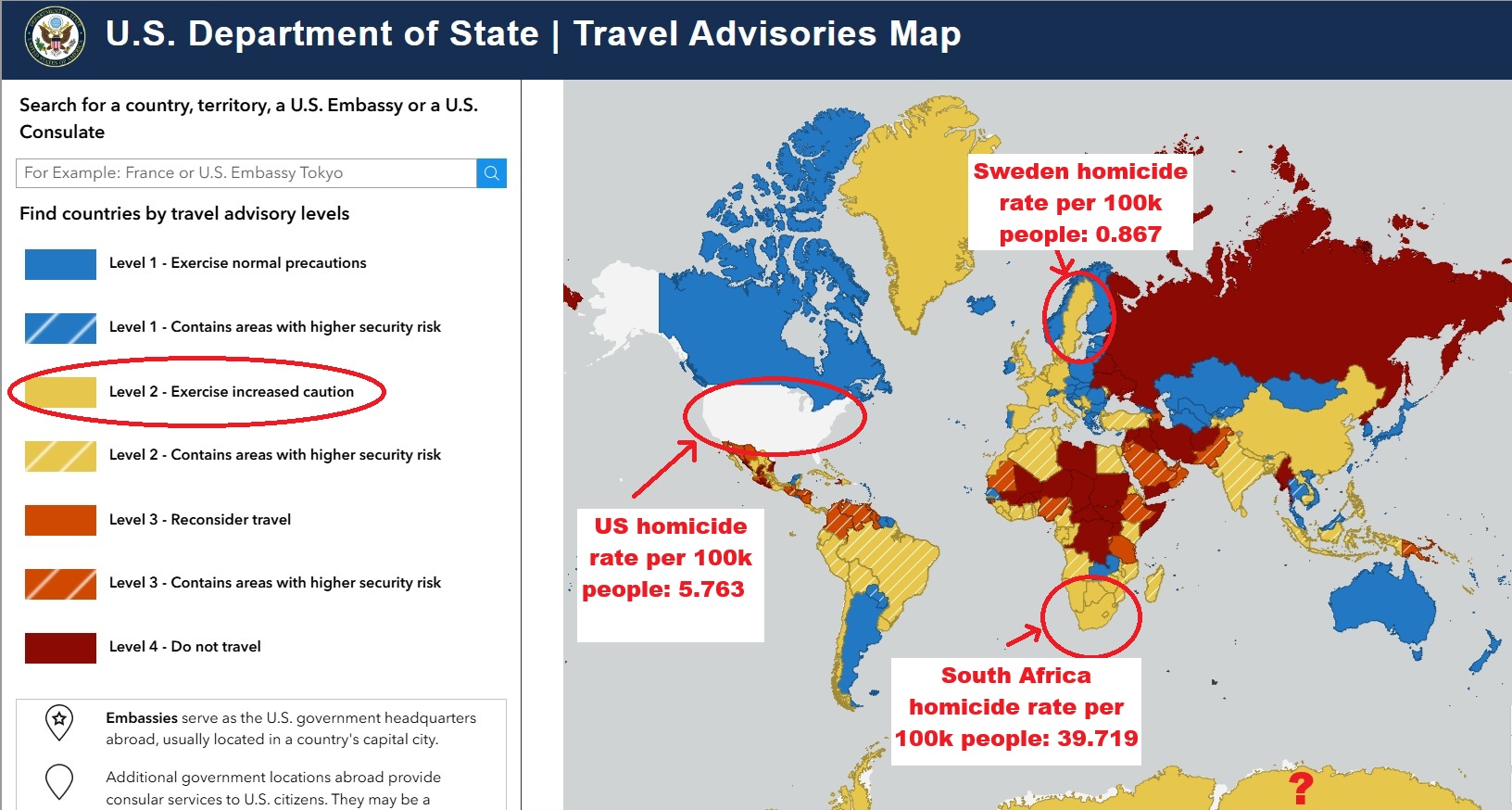
Guess where all the people flooding into Europe are coming from.
Go on. Guess.
Posted in Think about it. | Comments Off on Bonus Thought for the Day
13th August 2026

Not to mention that getting outside for a few minutes once the sun has risen sets your circadian rhythm properly. Another thing to do as early as possible after you wake up.
Posted in Think about it. | Comments Off on Thought for the Day
12th August 2026
Read it.
Is it time—or already past time—to consider something that was once called distributism as an alternative to what has long been called capitalism, or what is still being called socialism? Distributism was the name given to this alternative better than a century ago. The idea was to get property and some measure of economic independence distributed into the hands of as many people as possible.
Here we are in 2026, and long-discredited ideas of socialism are making a comeback. Suddenly forgotten are its past failures, as well as Margaret Thatcher’s great line that the trouble with socialism is that you eventually run out of other people’s money. Nonetheless it’s still being sold, and sold as the next logical, even inevitable, step taken in accordance with something called the arc of history.
Also forgotten are the long-ago efforts of Democrats like Harry Truman and Hubert Humphrey to separate socialists, fellow travelers, “no enemies to the left” popular fronters, and yes, even communists from their party. And today? Today those very same forces are being welcomed into today’s version of a “big tent” Democratic party.
Posted in Think about it. | Comments Off on Reconsidering Distributism
12th August 2026
Worse on Purpose.
Right up top, I must admit that I am a huge car guy. I love old cars. I want to feel connected to the machine. I miss rowing through the gears on a manual transmission. In that sense, modern cars are unequivocally worse than their older counterparts.
So I went into this expecting to write an article bashing the industry about the myriad ways that cars themselves had gotten worse. I figured I’d find that components had gotten flimsier. That vehicles now don’t last as long as they used to. But after looking at the data, that just simply isn’t true. By almost every measure, the new car in your driveway is better than any equivalent in history.
A lot did get worse. Just not the car itself.
Posted in Think about it. | Comments Off on The Car Got Better. The Deal Got Worse.
12th August 2026
Real Clear Defense.
Today, CENTCOM and the White House are at a flexion point. It is not clear that they will be able to bomb the fanatical Iranian regime into submission, while abandoning the effort to open the Straits of Hormuz is not a politically viable option. It does appear to the mathematically oriented that bombing combined with the blockade of Iranian ports cannot fail to collapse the already failing Iranian economy. The trouble is, that hasn’t happened, yet. The White House and CENTCOM need a stratagem that will rock Tehran and cause them to, “Drink from the Chalice of Poison,” and submit to Washington’s demands.
Some of us at The Dupuy Institute (TDI) believe that shove to the chalice might come in the form of taking several islands in the Persian Gulf. In 1987-88, the Iranians had several surveillance platforms that were highly problematic to U.S. Navy efforts to safely convoy neutral oil tankers out of the Gulf. Eventually, several were destroyed, but the Iranian islands were not touched – undoubtedly to maintain the idea that U.S. forces were neutral and would get involved only when U.S., or U.S.-protected assets were attacked. These small Iranian islands continued to be a thorn in the side of U.S. and its Gulf allies.
Today, these islands continue to serve as intelligence outposts to monitor Gulf shipping. Specifically, Abu Musa, Siri, and Greater and Lesser Tunb Islands have small or no garrisons and could be relatively easy to seize from Iran and put an end to this surveillance. Tehran and its IRGC would be partially blinded, and it would reduce their situational awareness in the Gulf, making it more difficult for them to target commercial shipping moving into the Strait of Hormuz.
Posted in Think about it. | Comments Off on The U.S. Can Easily Seize Iran’s Strategic Islands
12th August 2026

You’re welcome.
Don’t forget to drink a cup of very cold water first thing after you get up, before you do anything else. You’ll be glad you did.
Posted in Think about it. | Comments Off on Thought for the Day
11th August 2026
Posted in Think about it. | Comments Off on Bonus Thought for the Day: Perspective on Water Use
11th August 2026

Looks that way to me.
Posted in Think about it. | 1 Comment »
11th August 2026
Read it.
Feel the burn….
In the heart of Manhattan, at the corner of Broadway and West 43rd Street, a massive new billboard is sending a provocative message to New York leadership: “Thanks for the jobs!”
As America faces what business leaders call a historic choice between free enterprise and expanding government control, Florida is taking the ideological fight directly to the doorstep of Democratic socialism.
Armed with a $1.8 trillion economy and record-breaking wealth migration, the Florida Chamber of Commerce has officially launched a Times Square campaign naming New York City Mayor Zohran Mamdani Florida’s “Economic Developer of the Year” — a reminder, according to the Chamber, of how progressive taxes and socialist policies are driving wealth, businesses and families to the Sunshine State.
“We wanted to thank him for the jobs, the companies, the people that they’re pushing out of New York — and a lot of them are coming to Florida,” Chamber CEO Mark Wilson first told Fox News Digital on Monday.
Posted in Think about it. | Comments Off on Florida Names NYC Mayor Zohran Mamdani ‘Economic Developer of the Year’ in Times Square Campaign
11th August 2026
The American Thinker.
One of the great ironies of American politics is that every movement swears it’s against censorship—right up until it has enough power to do some censoring of its own. It’s almost adorable.
For years, conservatives rightly criticized Big Tech, universities, corporate America, and legacy media for suppressing dissenting viewpoints. We argued that free speech wasn’t merely a constitutional protection; it was a moral principle. We insisted that bad ideas should be defeated in the marketplace of ideas rather than buried beneath bureaucratic decrees or algorithmic exile.
I agreed then. I still do. Which is why I’m beginning to ask a question that makes some people on my own side a little uncomfortable.
What happens when conservatives become just as tempted to use institutional power to silence people they don’t like? As a Black conservative, I’ve learned that free speech is one of those principles everybody loves until somebody they can’t stand starts talking. Then suddenly the Constitution comes with an asterisk.
Posted in Think about it. | Comments Off on The New Censorship Isn’t Coming From the Left—It’s Coming From Everyone
10th August 2026
Read it.
Sometimes the old ways are best.
Posted in Think about it. | Comments Off on A Falling Weight Just Broke the Sound Barrier with Tom Stanton’s Supersonic Trebuchet
10th August 2026
Babylon Bee.
A new report confirmed that white people remained totally unaffected after a massive recall was issued across the U.S. for contaminated jalapeños.
White privilege: It’s not just for breakfast any more.
Posted in Think about it. | Comments Off on Report: White People Completely Unaffected by Jalapeño Recall
10th August 2026
Haitians who were admitted to the U.S. with Temporary Protected Status after an earthquake in Haiti in 2010 are finally being sent back, and the Left are jerking enough tears to fill the Grand Canyon.
They have had sixteen years to apply for permanent residency and have not done so.
Tim Pool explains it all to you.
Next up: Sudanese and Syrians.
Posted in Think about it. | Comments Off on Mass Deportation Has Begun
10th August 2026
Politico, a Voice of the Crust.
Nestled within a sleepy community campground and roadside cafe, hundreds of Canadians are gathered to imagine a new country of their own.
It’s July 1, and they’re hosting a family-friendly event that looks like a typical Canada Day celebration. Live music, a farmers’ market, hamburgers on the grill. Except there isn’t a Maple Leaf in sight.
Instead, people have wrapped themselves in Alberta’s flag, wave “we’re done” banners and wear “Trump 2024” and MAGA — Make Alberta Great Again — ball caps. This is an “Albertans’ Day” gathering at the Whistle Stop Cafe, which gained notoriety for bucking pandemic-era rules and which former Alberta premier Jason Kenney calls “ground zero” for the province’s fast-growing separatist movement.
Posted in Think about it. | Comments Off on The Canadian Secessionists Who Love Trump
7th August 2026
Task & Purpose.
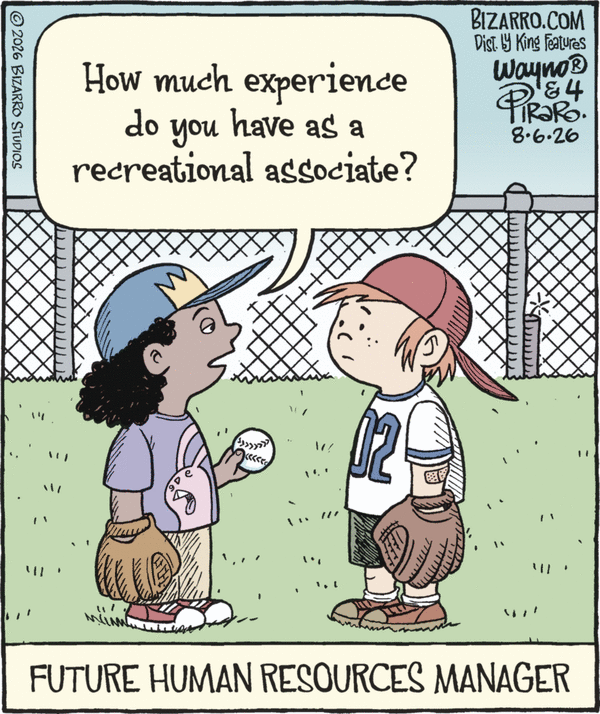
For former enlisted, I would look first for Good Conduct Medals.
Bringing veterans into your organization shouldn’t be a charitable act, or some abstract nod to patriotism. The sacrifices military service requires, even for a single enlistment, can demonstrate to savvy hiring managers that this individual knows how to successfully integrate into a group and improve it at every level. The military is not a status quo organization. I like to hire veterans because, time and again, they will outperform my expectations.
Whether in sales, estimating, field management, or administration, construction — my industry — is an unforgiving business. Projects have tight schedules, changing priorities, demanding customers, and little room for excuses. Success depends on people who show up every day, solve problems under pressure, and remain committed to the team when things become difficult.
Those are the exact characteristics the military develops.
They also beat into you the notion that The Mission Comes First. That is an excellent work ethic to offer an employer, and more than one employer during my working life have told me how much they appreciate it.
Posted in Think about it. | Comments Off on When It Comes to Education, Here’s What I Look for When Hiring Veterans
7th August 2026
Posted in Think about it. | Comments Off on Thought for the Day: Racism in America
7th August 2026
Read it.
Every such order that he signs involves his opponents in time and trouble and expense. And he has made it clear that he’s going to keep trying to fix the problem as long as he remains President. (Sound familiar? It’s the same trick Democrats have used since Wilson.)
President Donald Trump signed two executive orders on Thursday aimed at limiting birthright citizenship, after the Supreme Court in June struck down his previous order restricting the policy.
“We had a very unfortunate decision in the Supreme Court concerning birthright [citizenship]… so we’re making adjustments,” Trump said in the Oval Office.
Birthright citizenship is the practice of the babies of noncitizens receiving citizenship if they are born in the United States. The Supreme Court’s majority opinion in Trump v. Barbara, authored by Chief Justice John Roberts and issued on June 30, stated that the citizenship clause of the 14th Amendment requires all children born within the United States to automatically qualify as citizens at birth.
Trump’s first executive order, signed on Thursday, identifies certain categories of children of noncitizens who are not entitled to birthright citizenship. The White House says those categories are consistent with historical exceptions recognized by the Supreme Court.
The second order directs the secretaries of state and homeland security to end the practice of birth tourism, when a foreign national travels to the U.S. for the purpose of giving birth to a child and obtaining citizenship for that child. In recent years, Chinese nationals have hired surrogates to give birth to their children on U.S. territory.
“People are building businesses around it, from—wealthy people are building businesses around birthright citizenship. That’s not the way it’s supposed to work. It’s a disgrace,” Trump said. They’re buying their way in, and we’re not going to let it happen.”
Posted in Think about it. | Comments Off on Trump Signs Executive Orders Cracking Down on Birthright Citizenship
7th August 2026
Read it.
But the days of 25 year old men naively getting hoodwinked into thinking they actually did something wrong are rapidly coming to a close, if not, are outright over. Long gone are the days where men fall for the vile trap of “if you don’t know, I’m not telling you.” And not a single guy believes you have to cancel the date because your “girlfriend just broke up with her boyfriend and really needs her right now.” Because while men today may be leaderless, fatherless, and not have an older brother to warn them about “the ways of women,” they do have the internet. And its existence has fundamentally upended the dynamic between men and women.
Once you’ve taken the Red Pill, you never go back.
I heartily recommend the books by the author of this post, Aaron Clary. Don’t let his acerbic tone dissuade you.
Posted in Think about it. | Comments Off on A Post Argument World
7th August 2026
Read it.
Might this be the oldest surviving structure in the world? It could very well be, but it wasn’t crafted by the hands of modern Homo sapiens.
To find it, archaeologists had to tread carefully for 336 meters (1,102 feet) into the dank Bruniquel Cave, located in a picturesque pocket of southwestern France, not far from Toulouse.
Once they reached its largest chamber, they were confronted with two structures made from stalagmites that had been yanked from the cavern floor, broken into bits, and placed in a circular formation.
Posted in Think about it. | Comments Off on Deep Inside a Cave, Neanderthals Built a Circular Structure Made af Stalagmites Around 176,500 Years Ago
6th August 2026
The Other McCain.
One of the problems with American politics is how the two-party system tends to foster a Manichean duality on every issue. The Democrat “borg” (which includes media and academia) pushes whatever its policy agenda may be at any moment, and demonizes anyone who dissents. Meanwhile, those of us in the conservative opposition (Republicans, by default) are compelled to naysay whatever Democrats are advocating. Over the course of decades, one may see the two coalitions change — constituent groups changing loyalties — but this process is usually so gradual that it is not recognized at the time such shifts are happening.
One of the sudden shifts came in 1994, when the Republican Party’s “Contract With America” helped produce one of the most consequential midterm elections in American history. For the first time in 40 years, the GOP captured control of both Houses of Congress. Among other things, 1994 marked the beginning of the end of moderate or conservative Democrats being able to win elections in the South. This was ironic, in that Bill Clinton had been elected as an alleged moderate, but during his first two years as president, enacted an agenda so left-wing that it completely alienated many of his erstwhile supporters — including me.
You don’t get to backstab me twice.
…
Believing that they are better than everybody else — not merely smarter, but also more “compassionate,” etc. — is what makes our elite so insufferably obnoxious, especially to those of us who tested pretty doggone good ourselves, even if we didn’t go to Harvard.
Posted in Think about it. | Comments Off on IQ Voodoo and Other Errors
6th August 2026
Posted in Think about it. | Comments Off on Bonus Thought for the Day
6th August 2026
The War Zone.
From short-range missiles that threaten Taiwan to dual-capable weapons that can reach Guam, these varied systems are a key component of China’s anti-access strategy.
Posted in Think about it. | Comments Off on China’s Growing Regional Ballistic Missile Arsenal: A Guide
5th August 2026
Posted in Think about it. | Comments Off on Thought for the Day
4th August 2026
Read it.
Hey, we’ve all wanted to do that.
They’ll probably spend more supporting him in prison than it would have cost them in benefits.
Posted in Think about it. | Comments Off on British Man Only Gets Two Years in Prison for Stuffing Dead Mom in Freezer So He Could Continue to Collect Her Benefits
4th August 2026
Posted in Think about it. | Comments Off on This Dude Swam 56 Hours Without Sleep to Be the First to Swim From Sweden to Poland
4th August 2026
Posted in Think about it. | Comments Off on Bonus Thought for the Day
4th August 2026
Posted in Think about it. | Comments Off on Thought for the Day
3rd August 2026
Read it.
Gee, imagine that. There must not be enough black teen gangbangers to take up the slack. Bummer.
Crime rates have fallen to “historic lows” across the United States, with homicides this year on track to register the lowest level in at least 126 years, according to the Department of Homeland Security (DHS).
In the first half of 2026, homicides were down 18 percent compared to the first half of last year, DHS said in a July 31 statement. Carjacking crimes tumbled 47 percent during this period, motor vehicle thefts fell 20 percent, robberies dropped 17 percent, and residential burglaries declined 13 percent.
The numbers come from a July 2026 report from the nonpartisan think tank Council on Criminal Justice (CCJ) that assessed crime stats across various U.S. cities.
Posted in Think about it. | Comments Off on Murders in the us Set to Hit 126-Year-Low Following Illegal Immigrant Deportations: DHS
3rd August 2026

People with friends waste a lot of time and trouble on other people’s problems, and don’t get me started on family….
Posted in Think about it. | Comments Off on Thought for the Day
3rd August 2026
Construction Physics.
A battery technology that’s getting a lot of attention is solid-state batteries, lithium-ion batteries that replace the liquid electrolyte with a solid material. Chinese battery manufacturer CATL alone had more than 1,000 people devoted to solid-state battery research as of 2024, and battery manufacturers like BYD, LG, and Samsung are also working on the technology. US and European startups making solid-state batteries have collectively raised over $4 billion as of 2025.
Solid-state batteries have several potential advantages over the lithium-ion batteries with liquid electrolyte we use now. For one, replacing the liquid electrolyte with a solid should allow for lighter batteries, requiring less mass per unit of energy delivered. And because the liquid electrolyte currently used in batteries is flammable, replacing it with a solid could make batteries safer and less susceptible to fire.
I wanted to better understand why, exactly, solid-state batteries have these advantages compared to conventional lithium-ion batteries, and how they fit into the broader arc of lithium battery improvements.
Posted in Think about it. | Comments Off on Why Is Everyone Trying to Build a Solid-State Battery?
3rd August 2026
Read it.
In 1997, historians William Strauss and Neil Howe published “The Fourth Turning,” a cyclical theory of Anglo-American history built around generational archetypes and recurring saecular rhythms of approximately 80 to 100 years — roughly the length of a long human life.
Their framework identified four “turnings,” each lasting roughly 20 to 25 years, that repeat in sequence.
The First Turning, the High, is an era of institutional confidence and community solidarity following a great crisis. The rules work, people trust them, conformity is rewarded — think the post-WWII boom, or the post-Civil War Reconstruction era.
The Second Turning, the Awakening, is a spiritual and cultural awakening that challenges the institutional consensus of the High. Individualism resurges; the establishment is questioned — the consciousness revolution of the 1960s-70s, the Second Great Awakening of the 1820s-30s.
The Third Turning, the Unraveling, sees institutions weaken, individualism reach its apex, and civic order decay. Trust collapses — in government, media, corporations, each other — as it did through the Culture Wars era of the 1980s-90s, or the Gilded Age of the 1870s-90s.
The Fourth Turning, the Crisis, is a decisive era of institutional destruction and reconstruction, typically catalysed by an existential threat — war, economic collapse, or civilisational rupture. The old order is swept away; a new one is forged. The Great Depression and WWII. The Civil War. The American Revolution.
If you see a blonde riding a dragon, it’s time to leave.
Posted in Think about it. | Comments Off on The Fourth Turning Is Here: The Old Order Is Breaking Down
2nd August 2026
Watch it.
If correcting nonsense costs you 10x the energy of the person producing it, and low-quality interaction measurably reduces your well-being, what does a rational actor do? They stop. Not because they’re mean, but because they do that math that you haven’t done yet.
Nothing personal—it’s just business; I always liked him.
“You cain’t fix stupid.” —Ron White
Posted in Think about it. | Comments Off on Why Intelligent People Are No Longer ‘Nice’ to Stupid People
2nd August 2026

I used to feel bad about reading during meals but nowadays that seems positively extraverted.
Posted in Think about it. | Comments Off on Thought for the Day
2nd August 2026
Public Domain Review.
Centuries before Neo instantly mastered Kung Fu in The Matrix, medieval scholars found a shortcut to years of difficult study: a magical manuscript that promised to fast-track advanced learning. Anne Lawrence-Mathers investigates the Ars notoria, its supposed powers, and the demonic influence it had upon some users.
The author is female with a hyphenated last name, so read with caution.
Mastering the full range of subjects taught in medieval universities normally required many years of hard and expensive study. From the thirteenth century on, however, an anonymous work known as the Ars notoria promised, through diagrams, incantations, and arcane rituals, to rapidly transmit to scholars the total knowledge of anything they might need. Condemned by church authorities, the fifty-six extant manuscripts nevertheless testify to the seductiveness of that offer.
Posted in Think about it. | Comments Off on Artificial Intelligence: Ars Notoria and the Promise of Instant Knowledge
2nd August 2026
Read it.
California, the most populous U.S. state and the one with the largest economy, ranked as the 35th best state in a new ranking published by U.S. News on July 28.
Utah ranked as the best state, followed by South Dakota, Minnesota, North Dakota, and Nebraska.
The ranking was based on scores in eight categories such as education, healthcare, economy, and fiscal stability, and it was weighted by survey opinions.
Posted in Think about it. | Comments Off on New Report Ranks California 35th Best State and Least Affordable
1st August 2026

Husbands do ‘hubby work’, i.e. anything that requires height or upper body strength that the wife just does not have.
Otherwise, you’re on your own.
Posted in Think about it. | Comments Off on Bonus Thought for the Day
1st August 2026
The Telegraph (UK).

Works for me (except for the nose-ring, of course).
Posted in Think about it. | Comments Off on Basketball’s New Anti-Trans Maga Poster Girl
1st August 2026

Some place cool.
Posted in Think about it. | Comments Off on Thought for the Day
1st August 2026
There is an historian with a YouTube channel who explores the insanity of racial classifications in America.
I Stopped Checking WHITE. Then This Happened?
If you get sucked into this rabbit hole, I have no sympathy for you….
For the record, I know who my great-grandparents were, and I am 7 parts Irish and 1 part Scots, and you can’t get much Whiter than that; maybe if you came from Norway (as my ancestors did 900 years ago). My paternal great-grandfather was born in Ireland in 1854, and I doubt that he ever saw a non-white person in his life until he got to Boston, and quite possibly not even then.
Posted in Think about it. | Comments Off on How Black Are You?
31st July 2026
Read it.
omeone carved a notch to lock two logs together—half a million years before Homo sapiens.
Obviously the Silurians.
Posted in Think about it. | Comments Off on Archaeologists Found a 476,000-Year-Old Wooden Structure. No One Knows Who Built It.
31st July 2026
Read it.
Smallpox is an age-old scourge with a terrible history.
Caused by the variola virus, it’s thought to have been responsible for some 4 million total deaths in Indigenous communities in the Americas after European colonizers arrived – communities with no immune protection against the virus.
Previously, the evidence for this has been a historical paper trail.
Now though, 500 years later, we have the first solid genetic evidence that it was indeed smallpox contracted from Europeans that led to this catastrophic population decline in Indigenous communities.
Oh, good. Another thing to blame white people for. Just think of it as evolution in action and move the fuck on.
Posted in Think about it. | Comments Off on ‘Clear Evidence’: Ancient DNA From Chilean Mummies Reveals Who Brought Smallpox to The Americas
31st July 2026
Read it.
But I’ve seen it everywhere. One group condemning President Trump for not sending firefighting help to Canada, the other group condemning President Trump for sending firefighting help to Canada so it’s not available to local fires.
One group condemning Congress for grilling that poor old hero Fauci, the other group condemning Congress for not jailing that old crook Fauci.
One group condemning parents for not getting their kids vaccinated thus causing the spread of measles, the other group pointing out that the current cases are vaccinated adults.
One claiming that Russia or Iran has won and the Ukraine or the USA are done for, the other claiming that the Ukraine or the USA has won and Russia or Iran is on the brink of total collapse.
One claiming that ICE is arresting and deporting Native American Tribal Members, the other pointing out that the photo is too blurry to make out if it’s ICE, there’s no evidence that the arrestee was deported, there’s no evidence of the legal status or tribal membership of the arrestee, there’s not even a name attached . . .
The award winning children’s book is banned! The smut is removed from the school library, go buy it online you nasty person.
A rational person would think these are fairly . . . reality checkable things? As checkable as the doe with the twins is? But they aren’t . . . that is, we ourselves cannot go there personally and look. Well, some of us have looked at the lack of aerial support in the timeline we would prefer to local fires, but it’s a bit harder to tell if that’s because the planes are stateside elsewhere, out of country elsewhere, getting repairs, or some other reason why reality simply couldn’t conform to our expectations.
Posted in Think about it. | Comments Off on Two Parties, Both Alike in Dignity
31st July 2026
Watch it.
Some of rhem appear to agree with me that root beer tastes like cough syrup. God knows what they’s think of Dr. Pepper.
Interestingly enough, a couple of the boys were from Italian families and refused to accept that Detroit deep-dish pizza is legitimately pizza, characterizing it as a form of lasagna. Can’t say they’re wrong.
Posted in Think about it. | Comments Off on British Highschoolers try Detroit Pizza With Root Beer
31st July 2026
Posted in Think about it. | Comments Off on Thought for the Day
31st July 2026
Read it.
Herzens), one could closely follow the psychological turmoil raging within the soul of Lieutenant Hofmiller after he asks the host’s daughter for a dance at a social gathering, completely unaware that she is paralyzed. What follows is the lieutenant’s Walk to Canossa, a primary lesson of which is understanding the different types of pity. Through the lieutenant, Zweig demonstrates that pity can be, on the one hand, active, rational, and genuinely helpful. On the other hand, it can be weak, sentimental, and selfish: not truly concerned with saving the other person, but with quickly appeasing one’s own conscience and avoiding the discomfort of confrontation. This sort of virtue signaling, devoid of rationality, ultimately drives both the victim and the benefactor to ruin.
Our age has hardly changed, as we currently live in the cult of empathy, which relates to the second type of pity depicted by Zweig. I recall from my own experience, even during my university times, that it was repeatedly emphasized: if you are not empathetic, you cannot be a good teacher since you must put yourself in the child’s shoes. This is undeniably true but just to a rational extent. Nowadays you cannot even be a corporate executive without empathy, as its absence is said to harm workplace well-being and increase organizational turnover. In fact, even the police are now expected to be empathetic since, according to contemporary progressive narratives, a person exhibiting unlawful behavior is often merely a victim of social circumstances like ‘systemic, white supremacist oppression.’
However, this is one of the greatest fallacies of our time. Empathy is an individual, personal virtue, not a prescriptive behavioral norm—not a universal metric that dictates at all costs how you ought to be. Elevated from the micro to the macro level and made the exclusive basis of state and institutional decision-making, boundless empathy has a self-destructive effect; this is the thesis argued by Gad Saad in his latest book, Suicidal Empathy: Dying to Be Kind.
Posted in Think about it. | Comments Off on The Age of Pathological Benevolence